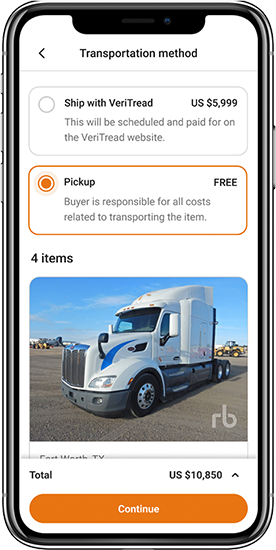
Introduction

Ritchie Bros. is the world’s largest marketplace for buying and selling industrial equipment, supporting both online and onsite transactions.

My role: Lead UX Designer and Researcher
Timeline: 5 months, 2021
Collaborated with: Product, Engineering and Data Science
Platforms: Mobile, Desktop
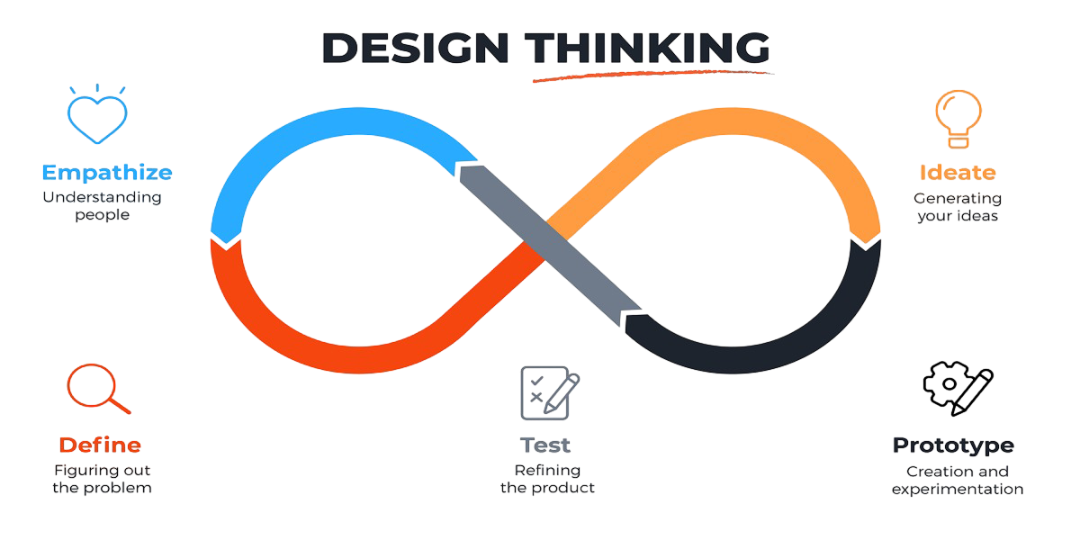
Problem

The checkout experience was inconsistent and introduced unnecessary friction during equipment purchases. Buyers were required to manually request transportation options after completing checkout, leading to confusion, delays, and frequent reliance on customer support to complete delivery arrangements.

Research

I began by reviewing existing user flows, identifying gaps, and observing how buyers managed transportation after checkout. Research revealed that buyers experienced multiple handoffs between systems and often relied on offline communication to complete transportation, which increased friction and reduced confidence in the overall experience.

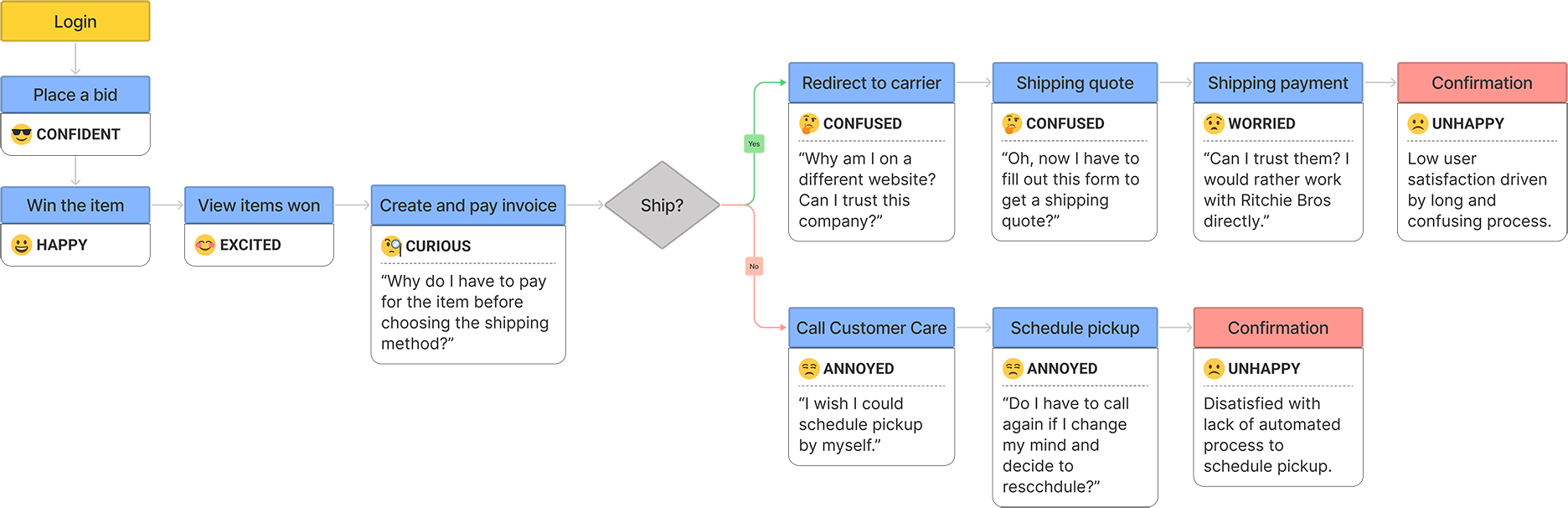
Emotional User Journey

To better understand user emotions throughout checkout, I mapped the emotional journey from bidding through confirmation. This highlighted key pain points where users felt confused or frustrated—particularly when estimating delivery costs, being redirected to third-party carriers, or scheduling pickup through customer support instead of self-service tools.

Goals:

    • Complete both purchase and delivery in one flow
    • Clearly understand transportation costs and delivery timelines
    • Minimize the need for external communication during checkout

Frustrations:

    • Lack of item specification such as dimension and weight
    • Having to arrange delivery separately after checkout
    • Lack of visibility into total costs and estimated delivery times

David
Age: 45 years old

Role: Construction Manager

Tech-savviness: Very low

Other Findings

Additional analysis of customer feedback and support tickets revealed recurring issues:

  • 40% of customer care calls were related to the lack of an automated pickup scheduling system.
  • Many buyers arrived at yard locations without scheduled appointments, causing operational strain for staff and frustration for customers.

These findings reinforced that the problem extended beyond UX into operational efficiency.

Hypothesis

If transportation options are integrated directly into the checkout flow and allow buyers to understand costs, timelines, and next steps before completing a purchase, then users will complete transactions with greater confidence, rely less on customer support, and complete more deliveries.

Brainstorming on Solutions

After identifying the main usability gaps, I collaborated with stakeholders to explore design directions that integrated transportation directly into checkout. We brainstormed multiple approaches focused on simplifying delivery selection while keeping the interface familiar and reducing disruption to existing purchase behavior.

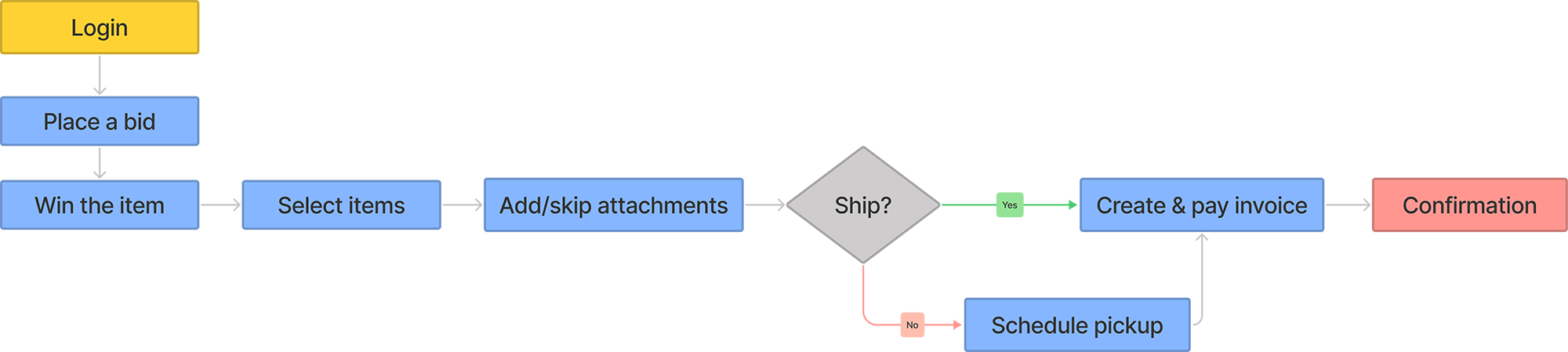
New User Flow

Based on these explorations, I designed a unified user flow that seamlessly connected checkout and transportation. The updated flow allowed buyers to choose delivery or pickup, review shipping costs, schedule pickup when needed, and confirm details—all within a single experience.

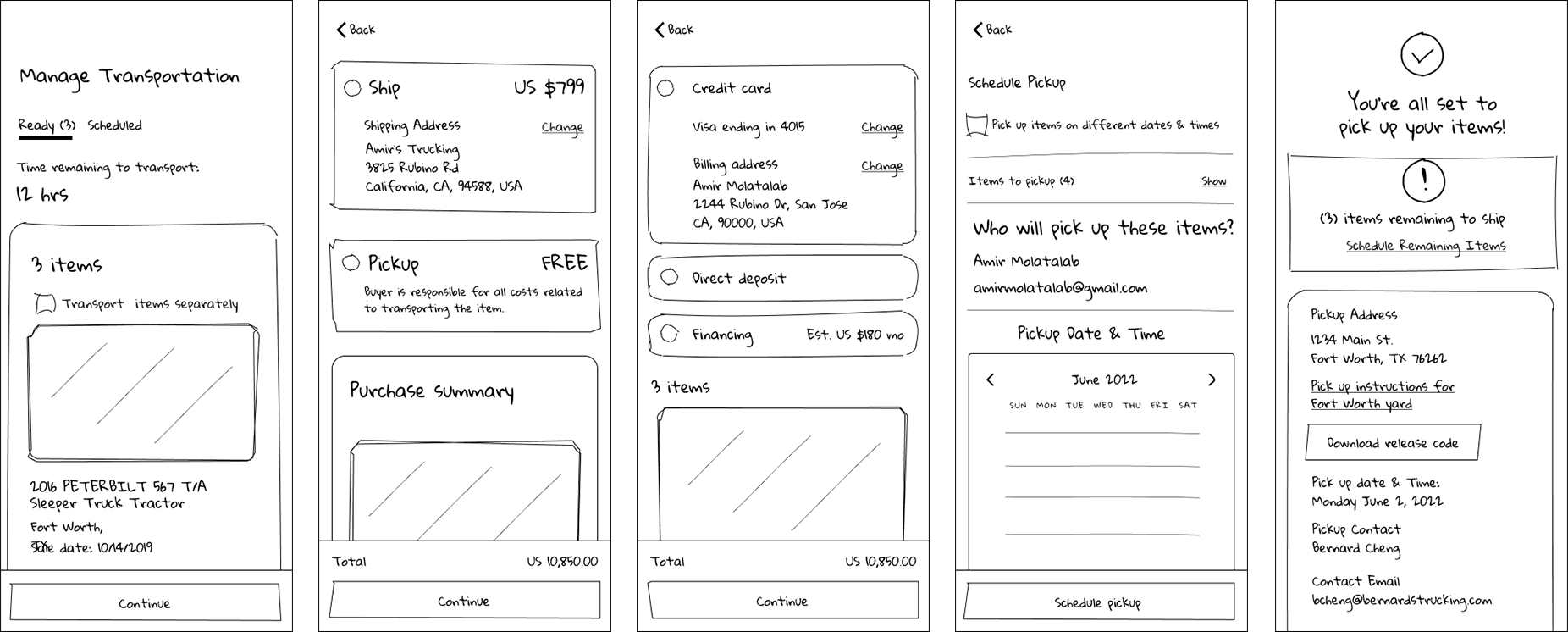
Low-Fidelity Wireframes

Using the new flow, I created low-fidelity wireframes to validate layout, information hierarchy, and decision points. These helped confirm that buyers could easily find transportation options and understand costs and timelines before completing checkout.

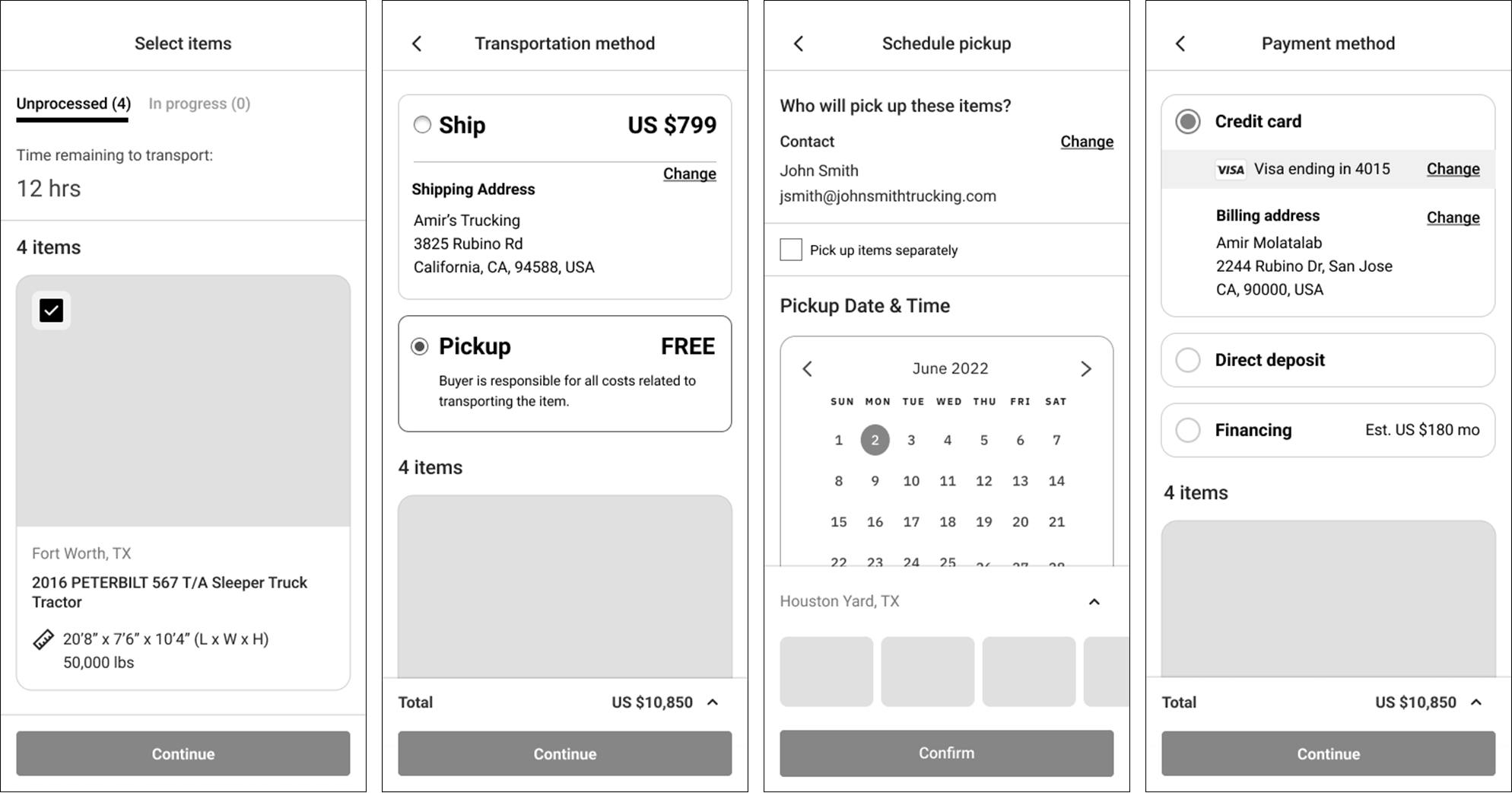
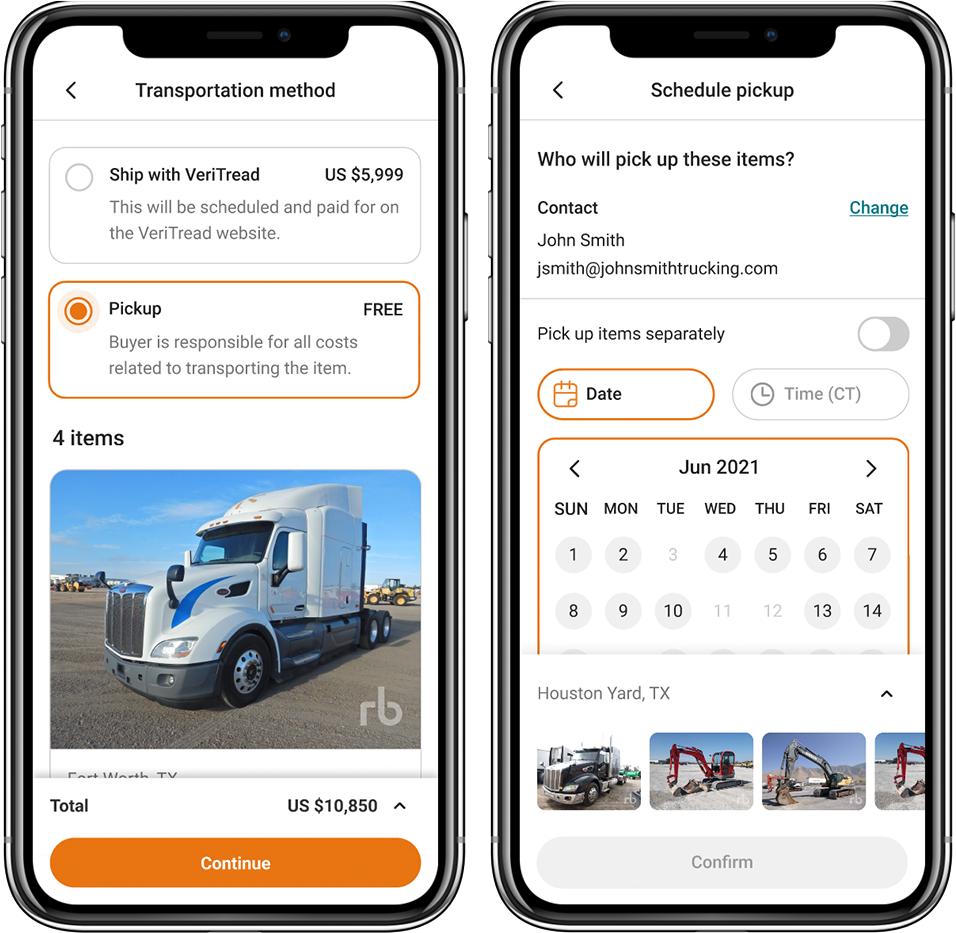
High-Fidelity Wireframes

After validating the low-fidelity concepts, I created high-fidelity designs aligned with the mobile design system.

Key Improvements Included:

  • Integrated transportation selection within checkout
  • Clear breakdown of shipping options and estimated delivery times
  • Streamlined pickup scheduling for local and long-distance carriers

Testing and Evaluation

I conducted usability testing with 12 frequent buyers to evaluate clarity and ease of use. Participants rated the updated experience 4.7 out of 5, highlighting the value of managing both purchase and transportation within a single interface. The results confirmed that integrating transportation directly into checkout significantly reduced confusion and improved overall confidence.

Results

Within just three months of launch:

Customer care calls were reduced by 40%

Shipping deliveries increased by 25%

These outcomes validated the impact of reducing handoffs and enabling self-service transportation within checkout.

What I learned

This project reinforced the importance of designing beyond the interface and considering the full ecosystem of users, customer support, and operations. While the initial focus was simplifying checkout, research revealed how operational pain points directly shaped customer satisfaction. Collaborating early with operations and engineering helped balance usability with process efficiency, and introducing automated pickup scheduling improved outcomes not only for buyers but also for internal teams. The experience strengthened my approach to designing complex, cross-functional systems.

COPYRIGHT © BY PROUXDESIGN.COM - ALL RIGHTS RESERVED